
Product Certification Guide
Building a smart connected product is an exciting journey, but navigating the regulatory landscape can be one of the most challenging aspects of bringing your product to market. When you build a product, certifications may be required to ensure your product complies with legal, safety, and performance standards. When you build a wireless product, certifications are almost always needed to ensure your product meets safety, electromagnetic compatibility, and network interoperability standards required in different regions around the world.
This guide will help you understand what certifications the Blues Notecard already provides, determine what additional certifications your complete product may need, and navigate the process of obtaining those certifications efficiently and cost-effectively.
 note
noteKey Takeaways
- Blues Notecard is pre-certified for RF emissions, which saves you tens of thousands of dollars and months of testing.
- Your host device still needs EMC certification (FCC Part 15B in the US, CE EMC in Europe) which costs $3,000-15,000 depending on market.
- Plan 8-12 weeks for the certification process; start during design, not after.
- Keep documentation for 10 years—you may need it for market surveillance requests.
In This Guide
This guide covers the regulatory certification landscape for connected products built with Blues Notecard:
- Why Certifications Matter: Legal market access, safety, spectrum management, and environmental compliance.
- The Pre-Certified Module Advantage: How Notecard's modular approval saves time and money.
- Blues Notecard Certifications: What's already certified and where to find certification details by device.
- Determining Your Certification Requirements: Device categories, host device requirements, and a certification decision matrix.
- The Certification Process: Timeline, planning, design considerations, testing, and documentation.
- Labeling Requirements: Required labels and user manual disclosures by market.
- Best Practices: Start early, leverage pre-certification, choose partners, and document everything.
Why Certifications Matter
Regulatory certifications serve several critical purposes for connected products. Legal market access is often the most immediate concern, as many certifications are legally required to sell products in specific regions, and without proper certification your products can be seized at customs, removed from sale, or result in significant fines.
Safety assurance verifies that your product won't cause electrical hazards, fires, or other safety risks to users. Spectrum management through RF certifications ensures your device won't interfere with other wireless communications, including emergency services and critical infrastructure. Network compatibility certifications for cellular ensure your device can properly communicate on carrier networks without causing issues for other users. Finally, environmental responsibility through material restrictions like RoHS ensures products don't contain hazardous substances that harm the environment or human health.
For wireless products, spectrum management and network compatibility certifications are often the most complex and expensive, which is why using a pre-certified module like Notecard can be a game-changer.
Who This Guide Is For
This guide is intended for hardware engineers and system architects, product managers and technical founders, and developers bringing a connected product to market using Blues Notecard.
The Pre-Certified Module Advantage
A significant benefit of using Blues Notecard is that it comes pre-certified for the most complex and expensive certifications, specifically those related to RF transmission (intentional radiator certifications). This can save you tens of thousands of dollars and months of testing time.
When you integrate a pre-certified module like the Notecard into your product, you can leverage that module's existing certifications for the RF transmission components, provided you follow the integration guidelines.
This approach is often called "modular approval" and is recognized by major regulatory bodies including the FCC (US), ISED (Canada), and CE (Europe).
What "Pre-Certified" Means
When you use a Blues Notecard, the radio module itself has already been tested and approved. Certifications apply to the Notecard hardware as shipped, and test reports and certification IDs are available for reuse in your product's certification process.
Blues Notecard Certifications
Blues Notecard and Starnote devices undergo rigorous certification processes to verify compliance with global regulatory agencies. Each certification addresses specific aspects of product compliance including safety, emissions, materials, and network operation. Blues maintains an up-to-date certifications reference covering:
- Cellular (LTE Cat-1, LTE Cat-1 bis, LTE Cat-M, NB-IoT)
- Satellite (Skylo, Iridium)
- LoRa
- WiFi
- Region-specific regulatory approvals
Finding Certification Details by Device
Blues provides comprehensive certification information for each Notecard and Starnote SKU. To find the specific certifications for your device:
- Visit the Blues Certifications hub
- Navigate to Certifications by Device for consolidated tables showing all standards each SKU complies with
- Access individual Notecard datasheets for detailed certification reports, including PDF certificates and test dates
- Review Regulatory Agencies and Standards for detailed explanations of each certification body
Each Notecard datasheet includes a Certifications section with links to the actual certification documents, including FCC IDs, IC IDs, and test reports that you may need to reference in your own product documentation.
You should always start by reviewing the Certifications by Device table for the exact Notecard you are using.
The following table summarizes the key regulatory bodies and standards that Blues devices are certified against:
| Standard | Description & Purpose |
|---|---|
| CE | Conformité Européenne marking indicates compliance with European health, safety, and environmental protection legislation. Required for products sold within the European Economic Area (EEA). |
| FCC | Federal Communications Commission certification for electromagnetic compatibility and RF emissions in the United States. Required for all electronic devices sold in the U.S. |
| IEC | International Electrotechnical Commission standards for global electrical, electronic, and performance requirements. IEC 62368-1 covers safety for audio/video, IT, and communication equipment. |
| ISED | Innovation, Science and Economic Development Canada certification (formerly Industry Canada/IC). Ensures compliance with Canadian regulations for RF emissions and electromagnetic interference. |
| PTCRB | PCS Type Certification Review Board certification for North American cellular device interoperability. Ensures devices work properly on carrier networks. |
| RoHS | Restriction of Hazardous Substances directive ensures products don't contain hazardous materials above specified levels (lead, cadmium, mercury, etc.). Required for EU markets and aligned with similar regulations globally. |
| Skylo NTN | Non-Terrestrial Network certification for guaranteed NB-IoT satellite handoff compliance on the Skylo network. Applicable to Starnote for Skylo and Notecard for Skylo devices. |
Determining Your Certification Requirements
While the Notecard handles the complex RF certifications, your complete connected product will likely need additional certifications depending on your target markets, product category, and specific features.
Understanding Device Categories
The FCC (and similar agencies globally) categorizes electronic devices based on their electromagnetic behavior. Intentional radiators are devices that deliberately generate and emit RF energy (e.g., cellular modules, WiFi transmitters, Bluetooth radios)—the Notecard is an intentional radiator, and its certifications cover this category. Unintentional radiators are devices that generate RF energy as a byproduct of their operation (e.g., computers, digital cameras, microprocessors)—your host device likely falls into this category. Incidental radiators are devices not designed to use, generate, or emit RF energy (e.g., basic motors, mechanical switches).
noteYour connected product combines an intentional radiator (Notecard) with your host device (typically an unintentional radiator). Each category has different certification requirements.
What Your Host Device Needs
United States (FCC)
When using a pre-certified module like Notecard, your certification requirements are significantly simplified. The Intentional Radiator (Part 15 Subpart C) requirement is covered by Notecard's modular certification—no additional certification is needed for the RF transmitter portion if you follow integration guidelines. The Unintentional Radiator (Part 15 Subpart B) requirement means your host device needs to demonstrate compliance through Supplier's Declaration of Conformity (SDoC), which involves EMC testing to show your device doesn't emit excessive electromagnetic interference.
European Union (CE/RED)
For the EU market, your product must comply with the Radio Equipment Directive (RED) 2014/53/EU. EMC requirements require demonstrating electromagnetic compatibility (EN 55032, EN 55035). Safety requirements mean complying with applicable safety standards such as IEC 62368-1 for ICT equipment. Cybersecurity requirements took effect August 1, 2025—RED Article 3.3(d)(e)(f) requires cybersecurity compliance for internet-connected devices. RoHS compliance ensures no restricted hazardous substances in your complete product. When using a pre-certified module like Notecard, your certification requirements are significantly simplified across several CE directives.
Canada (ISED)
Similar to FCC requirements, with ICES-003 compliance for unintentional radiators.
Certification Decision Matrix
Use this matrix to quickly identify which certifications your product likely needs based on target market and product characteristics:
| Market | Notecard Provides | You Must Obtain | Typical Cost |
|---|---|---|---|
| United States | FCC Part 15C (Intentional Radiator), PTCRB | FCC Part 15B SDoC (EMC testing) | $3,000-8,000 |
| Canada | ISED/IC (RF certification) | ICES-003 compliance | $2,000-5,000 |
| European Union | CE (RED radio requirements), RoHS | CE (EMC, Safety), RED 3.3 cybersecurity, Declaration of Conformity | $5,000-15,000 |
| Other Regions | Varies by Notecard SKU | Region-specific EMC and safety certifications | Varies by region |
 warning
Cost estimates are approximate and can vary significantly based on product complexity, testing lab, and specific requirements.
The Certification Process
Understanding the certification process helps you plan your product development timeline and budget effectively.
Certification Timeline Overview
A typical certification process takes 8-12 weeks. Here's what to expect:
| Week | Phase | Activities |
|---|---|---|
| 1-2 | Planning | Define markets, review Notecard certs, identify gaps, select test lab |
| 3-4 | Pre-compliance | Optional but recommended: identify issues before formal testing |
| 5-6 | Design fixes | Address any issues found in pre-compliance |
| 7-9 | Formal testing | EMC testing, safety testing (if required), RF exposure (if required) |
| 10-11 | Documentation | Compile technical files, declarations, labeling |
| 12 | Approval | Final review, apply marks, ready to ship |
warningTimelines can vary significantly based on product complexity, test lab availability, and whether issues are found during testing. Build buffer into your schedule.
Planning Phase
Start by defining target markets—identify all countries/regions where you plan to sell your product since different markets have different requirements. Review Notecard certifications to check which certifications your chosen Notecard SKU already has for your target markets. Identify gaps to determine what additional certifications your complete product needs. Plan your budget and timeline, expecting 8-12 weeks for most certification processes, though some can be expedited, and budget for testing, documentation, and any required certifications. Select testing partners by choosing accredited testing laboratories for any required certifications—if you don't yet have a preferred testing lab, reach out to the Blues team and we'd be happy to recommend a test partner for you to engage with.
Design Considerations
Design decisions made early in development can significantly impact certification success. Follow integration guidelines by adhering to the Notecard Carrier Design Guide for antenna placement, keep-out areas, and power supply requirements. Implement EMC best practices including proper grounding, shielding, and filtering to minimize electromagnetic emissions from your host device. Plan labeling space for required certification labels (FCC ID, CE mark, etc.) in your enclosure design. Maintain documentation preparation with detailed design documentation, schematics, and specifications for the certification process.
After you're confident in your design, you're ready to start the testing process.
Testing Phase
The testing phase is where you send samples of your product to a partner test lab to run relevant tests and receive results required for certification. The testing process will either result in a "passing grade" for your product (and relevant materials as proof) or may result in issues that need to be addressed before obtaining certification.
Pre-Compliance Testing (Recommended)
Before formal certification testing, consider pre-compliance testing with your testing lab to identify and fix issues early. This is often less expensive and can prevent costly retesting during formal certification.
Formal Compliance Testing
Your testing requirements will typically include EMC testing (radiated emissions, conducted emissions, and immunity testing per relevant standards such as EN 55032, EN 55035, and CISPR 32), safety testing if applicable (testing per IEC 62368-1 or other relevant safety standards), and RF exposure testing (SAR or MPE testing if required based on your product's configuration).
Documentation and Approval
Once you've completed testing, you'll want to work with your test lab to make sure that you have all of the required approval documents and test reports. Your test lab will be able to provide all of the information needed for the relevant certifications. This documentation is essential for certifications that require a filing or declaration, and you'll want to keep everything on hand if you ever need to produce evidence of certification in the future.
For FCC Supplier's Declaration of Conformity (SDoC), you'll need a Declaration of Conformity document, apply appropriate FCC labeling to your product, packaging, and documentation, and maintain records for FCC inspection (no filing required for SDoC).
For CE Marking, compile a Technical File with all design documentation, test reports, and risk assessments. Complete a Declaration of Conformity referencing applicable directives (RED, EMC, LVD, RoHS). Affix the CE mark to product, packaging, and documentation. For cybersecurity requirements (RED 3.3), either self-declare using harmonized standards (EN 18031-1, -2, -3) or use a Notified Body.
Once you've obtained appropriate certifications and documentation, you'll want to make sure to label your product and associated materials, where appropriate.
Labeling Requirements
Proper labeling is a critical part of regulatory compliance. Your product must display specific information to indicate compliance with applicable regulations.
Required Labels by Market
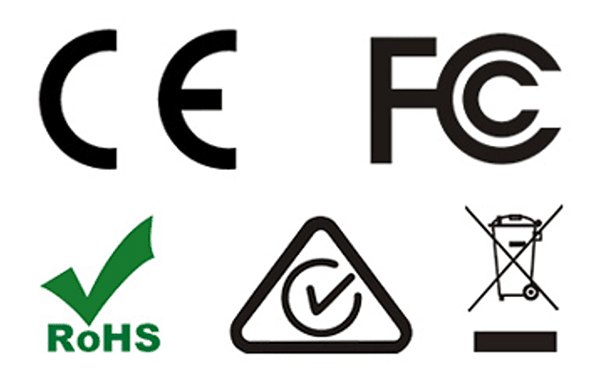
United States (FCC): Reference the Notecard's FCC ID in your product documentation (datasheets, product guides, and other materials for distribution). Include the compliance statement: "This device complies with part 15 of the FCC Rules. Operation is subject to the following two conditions: (1) This device may not cause harmful interference, and (2) this device must accept any interference received, including interference that may cause undesired operation." Display your trade name and model number for the unintentional radiator (SDoC) components.
European Union (CE): Affix the CE mark visibly, legibly, and indelibly on the product or nameplate. Include manufacturer name and address, provide EU responsible person contact information, and include reference to the EU Declaration of Conformity.
Canada (ISED): Reference the Notecard's IC ID in your product documentation and include applicable ICES compliance statements.
User Manual Requirements
Your product materials (manuals, installation guides, datasheets, etc.) must include specific disclosures based on the certifications. These include RF exposure warnings (if applicable), statements about modifications voiding compliance, antenna requirements and restrictions, co-location restrictions (operation with other transmitters), and references to applicable certifications (FCC ID, IC ID, CE).
Best Practices
Start Early
Certification planning should begin in the design phase, not after you've completed development. Research target market requirements before finalizing your design. Select Notecard SKUs that are certified for your target markets. Build certification costs and timeline into your project plan. Design with electromagnetic compatibility (EMC) best practices from the start.
Leverage Pre-Certification
Using pre-certified components significantly reduces certification burden. Notecard's modular certifications eliminate the most expensive and time-consuming RF testing. Follow integration guidelines precisely to maintain certification validity. Use recommended antennas and keep-out areas per the Notecard Carrier Design Guide.
Choose the Right Partners
Select accredited test laboratories with experience in connected products. Consider using the same lab for pre-compliance and formal testing for consistency. Work with a certification consultant if you're new to the process.
Document Everything
Maintain detailed technical files throughout development. Keep records of all design decisions that affect compliance. Store test reports and certifications securely for the required retention period (typically 10 years). Be prepared for compliance requests from market surveillance authorities (MSA)—these are designated national bodies responsible for ensuring that products placed on regional markets comply with legal, health, safety, and environmental regulations.
Resources and Next Steps
Certification doesn't have to be the bottleneck. By leveraging Notecard's pre-certified RF modules, planning early, and working with accredited test labs, you can navigate the regulatory process efficiently and get your connected product to market with confidence.
Blues Resources
Regulatory Body Resources
- FCC Equipment Authorization
- ISED Certification Engineering Bureau
- EU CE Marking
- EU Radio Equipment Directive
Getting Help
If you have questions about certifications for your Blues-based product:
- Post questions on the Blues Community Forum.
- Review individual Notecard and Starnote datasheets for detailed certification information.
- Contact Blues sales for enterprise-level certification support.
- Consider engaging a regulatory consultant for complex multi-market deployments.